
THE NOT SO HUMBLE TULIP
Dare I ask? Is spring finally here?
Tulips and daffodils, bluebells and crocuses are everywhere, so bright and cheerful and offering the promise of long, warm and sunny days to come.
So I thought it would be nice to feature tulips in my ‘photographs of the moment’.
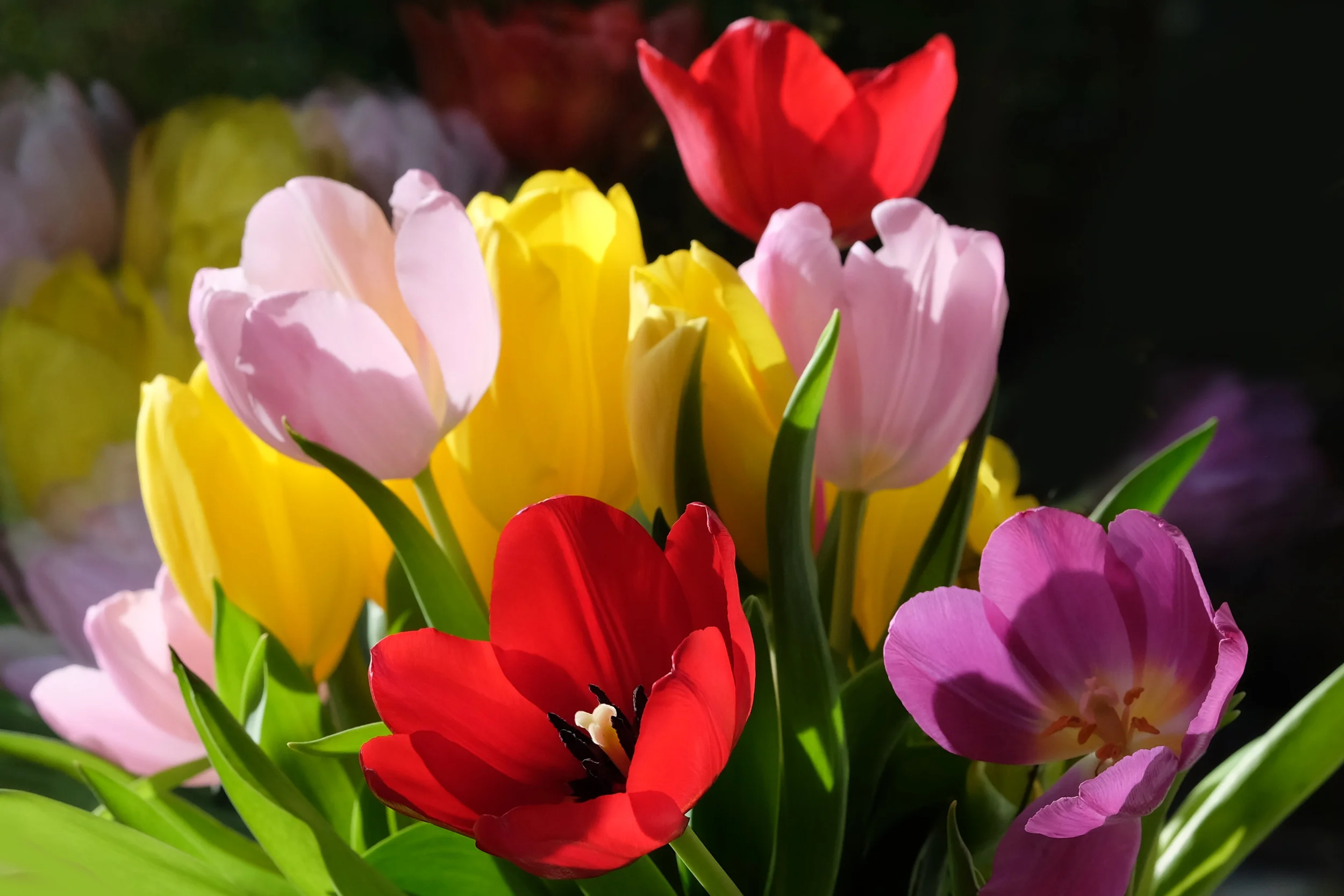
The multi-coloured bouquet below was a gift from my husband and these glorious flowers have brightened up our office over the last couple of weeks.
So vibrant and lush. I just love them!
WHY I LIKE PHOTOGRAPHING FLOWERS
I photograph many different subjects that range from products, scenery and architecture to people and animals, and like to find an unusual angle. Flowers hold a particular fascination because of their delicacy, colour and beauty, and tulips are one of my favourites .
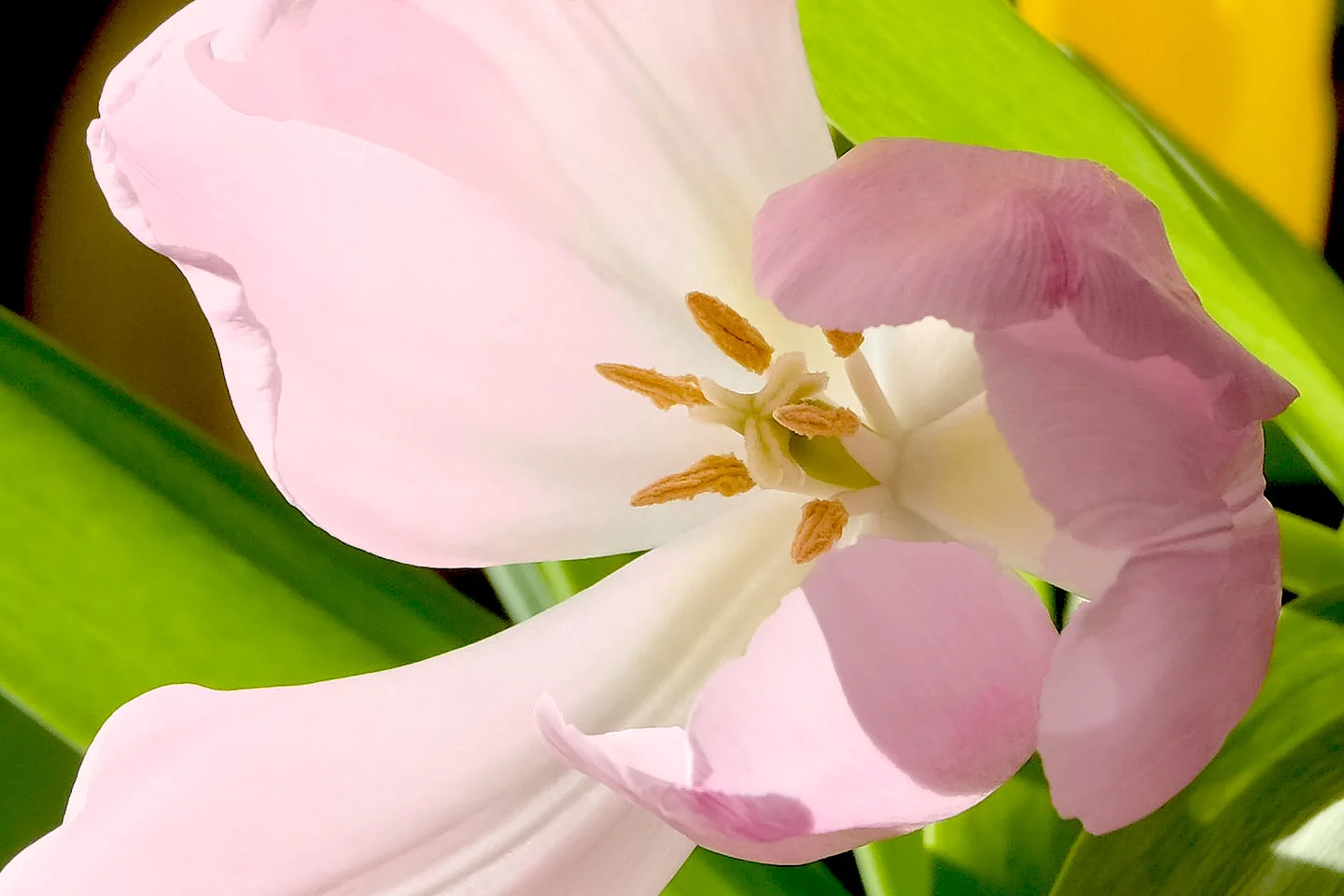
Macro photography (using a lens that gets up close and personal to the subject) is ideal for capturing the essence of the flower. By concentrating on a tiny area, some wonderful patterns, swirls and other-worldly shapes take on an abstract quality - especially where there are contrasting colours. Focusing can be a challenge and needs particular attention to detail because the distance between the nearest and farthest part of the plant is so small.
Wind can be an issue, too, and I have been known to set up elaborate windshields, or taken plants indoors to photograph them in a more controlled environment
HISTORY OF THE TULIP
The tulip is part of the lily family and has 150 species with over 3000 varieties; its name is thought to have originated from the Turkish word ‘tulbend’ which means ‘turban’. As early as 1000 AD, these beautiful flowers grew wild in abundance over a huge area in Turkey, Iran, Afghanistan, across Siberia and all the way to China.
It is believed that tulips were first cultivated by the Turks of the Ottoman Empire and the Europeans considered them a symbol of that empire. Not surprisingly, the tulip is the national flower of Turkey - and the unofficial national flower of Afghanistan.
In 1593, Flemish botanist Carolus Clusius became director of the University of Leiden's botanical garden and set about planting his own bulbs there. His mastery creating hybrids, dazzling colours and varieties caused huge interest and cultivation across Europe followed on a massive scale.
To this day, the Netherlands is the world’s main producer of tulips and currently exports around 3 billion bulbs every year.
During the period of Tulip Mania (1634-1637), tulips were the most expensive flowers in the world; there was a tulip frenzy when the more unusual varieties changed hands many times in a single day - nature’s take on the stock market! The value of a single bulb could equal up to 10 times the annual wages of a skilled craftsman.
THE BLACK TULIP
For centuries, growers and experts searched for this elusive flower. In 1986, in a greenhouse in a village in the north of Holland, the tips of thousands of green buds started to change colour. Dutch grower, Geert Hageman had spent 10 years cross-fertilising dark purple varieties, but the results were always disappointingly purple. That night his individual seeds came into flower and he spotted a shiny, black tip. Hageman had produced what no other grower had been able to do: the first black tulip in the world.
WHAT THE COLOURS MEAN
The tulip is symbolic and giving them can be a declaration of love. As with roses, each colour has a different meaning: red suggests true love; white represents and innocence; pink is a symbol of
caring and attachment, happiness and; purple symbolises royalty and rebirth; yellow is for sunshine and smiles; orange means energy, passion and enthusiasm; variegated varieties are like beautiful eyes, so ideal for a first date.
CHEESE AND TULIP CRISPS ANYONE?
And if you run out of onions when cooking, according to The Flower Expert Guide on Flowers and Gardening, tulip bulbs are a good replacement! Cheese and tulip crisps? Liver, bacon and tulips? Now, there’s a thought!
WHERE TO SEE DAZZLING SPRING DISPLAYS
Keukenhof, the Netherlands: the world’s largest open air flower garden, open between March and May
Pashley Manor Gardens, East Sussex - from 23 April to 05 May
Sizergh Castle, Cumbria
Chenies Manor House, Buckinghamshire - bank holiday weekend of 05 May
Kew Gardens, London
The Eden Project, Cornwall
Abbey House Garden, Cotswolds
